March/April Is When Utah DI Gets Flooded With Good Outdoor Gear
March 13, 2026
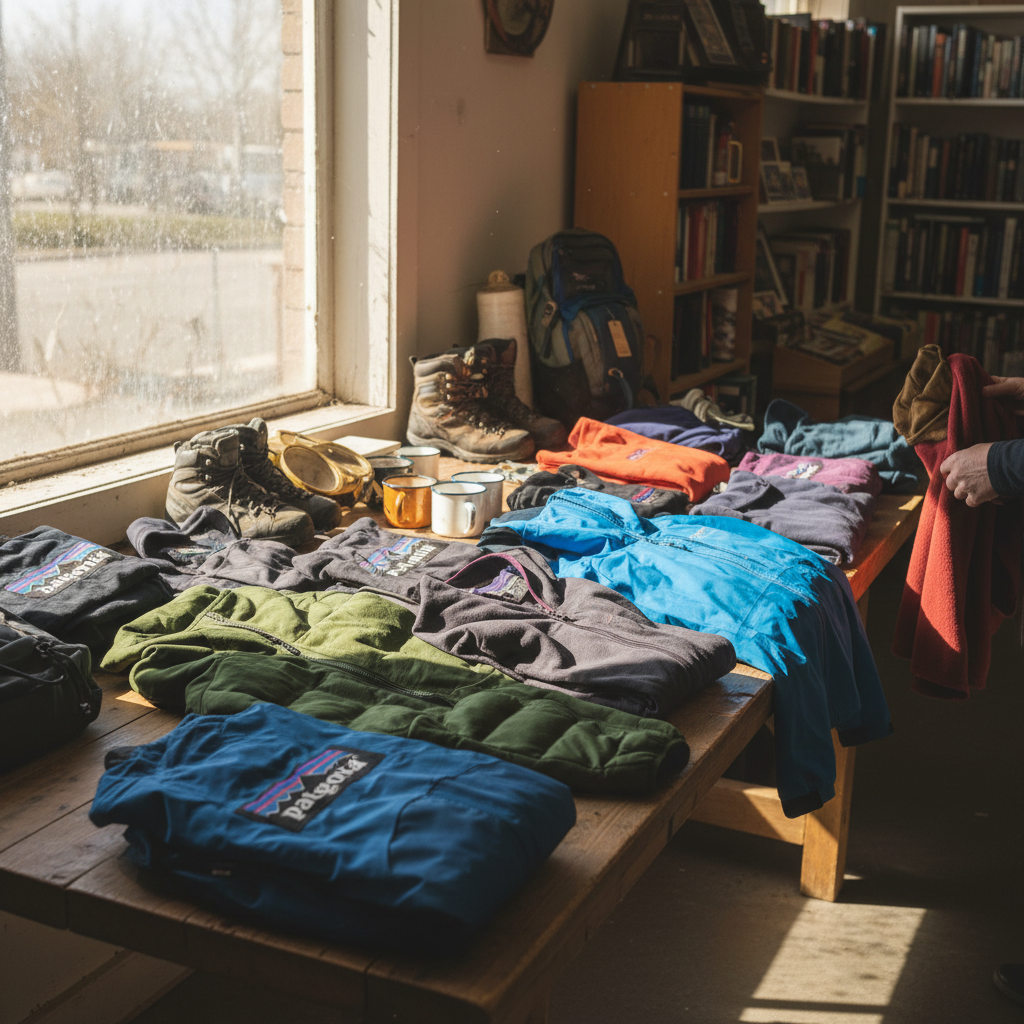
The window is short. The margins aren't.
March and April are the two most reliably profitable months on the Utah thrift calendar for outdoor gear. Not because of some abstract trend, because of a specific, repeatable behavior: Utah households purge their ski and hiking closets before spring travel season, and that inventory lands at Deseret Industries before most resellers are paying attention.
Sandy DI and Draper DI absorb a disproportionate share of this. Both stores sit in zip codes with high concentrations of gear-heavy households. Families who bought Patagonia and Arc'teryx at full MSRP three winters ago, used it twice, and decided they're into pickleball now. That gear goes straight into a donation box.
The resale margins during this six-week window are the best you'll see all year. Not close.
What actually shows up
The Hot Brands ticker tells you what's moving. Right now that means Patagonia, Arc'teryx, Black Diamond, Kühl, and Fjällräven. Those are the names to scan for on the racks. Everything else is secondary unless you spot an anomaly.
Patagonia fleeces are the highest-velocity item in this category. A R2 jacket or a classic Synchilla moves within 48 hours of being listed on Poshmark or eBay. Condition matters less than you'd think for the Synchilla. Vintage Patagonia fleece from the 1990s and early 2000s has its own collector market, and buyers will pay a premium for wear and fading that reads as authentic patina rather than damage.
Arc'teryx is a different game. Lower volume, higher per-unit margin. A Gore-Tex shell in any condition that's not structurally compromised will sell. Their entry-level pieces from five years ago are going for more than original retail on the secondary market right now.
Black Diamond gets overlooked by resellers who don't know the brand. Harnesses, ice axes, trekking poles, all of it has a deep buyer pool among climbers who search specifically for what they want.
Sandy DI vs. Draper DI: know the difference
Both locations are worth hitting, but they're not the same store.
Sandy DI on 900 East pulls from a broader donation base. More volume, more noise. You'll find more gear here, but you'll sort through more junk to get to it. Go on Tuesday or Wednesday mornings. Weekends have already been picked over by the time you walk in.
Draper DI is smaller and more curated. The intake team prices outdoor gear more aggressively there, which cuts your margin, but condition tends to be better. Worth targeting specifically for jackets and technical layers where condition actually affects resale price.
Neither store follows a rigid restock schedule, but both process donations faster during high-volume windows. During March and April, new gear hits the floor more frequently than usual. Multiple visits per week isn't obsessive. It's the strategy.
How to read the rack quickly
Time is the constraint. You're not browsing, you're scanning.
Move through the outerwear section by sleeve first. Patagonia and Arc'teryx use distinctive color palettes and silhouettes you start to recognize fast. Check the tag only after something catches your eye. Brand recognition by shape and color is faster than reading every label.
For fleeces, feel the weight. Patagonia's Synchilla has a distinctive texture that's hard to fake and easy to recognize once you've handled a few. Polartec fleece has a different hand feel than cheaper synthetics.
Inspect zippers before you commit. YKK zippers on outdoor gear are a positive signal. They're what the premium brands spec. A broken or seized zipper on a $6 DI jacket might still be worth buying if the shell is intact and the zipper is replaceable, but factor in the repair cost before pricing your resale.
Check the inside collar for country of manufacture. Patagonia pieces made in the USA, or older pieces made offshore before their mid-2000s manufacturing shift, have collector value beyond functional resale. "Made in USA" on a Patagonia label changes the pricing calculus.
Pricing the flip
Don't anchor to what you paid. Anchor to comps.
Before you buy anything, know the sold listings on eBay and Poshmark for that exact item. Not asking price, sold price. Asking prices are fantasy. Sold listings are data.
For Patagonia fleeces in good condition, current sold comps on Poshmark are running 3–4x DI pricing depending on the model and colorway. Vintage pieces in popular colorways can go higher. Arc'teryx shells are clearing 5–6x their DI price when listed correctly with accurate model numbers and condition descriptions.
"Listed correctly" does a lot of work in that sentence. Buyers searching for an Arc'teryx Beta AR in Medium Pilot aren't going to find your listing if you wrote "nice blue jacket Arc teryx." Learn the model names. Use them in your title.
Shipping weight matters. A down puffer in a stuff sack ships cheap. A heavy Gore-Tex shell ships at a cost that eats margin if you haven't priced for it. Weigh before you list.
The timing is the edge
Most resellers aren't thinking seasonally about DI. They're reacting, going when they have time, buying whatever looks good. The seasonal pattern at Sandy and Draper isn't a secret, but it's not something most casual thrifters are tracking either.
The window closes. By May, the donation surge has passed. The racks thin out, prices on the secondary market normalize, and the next inflection point doesn't come until the fall gear purge.
Six weeks. The stores are predictable, the brands are known, and the buyers are already on Poshmark waiting.
Gear Mentioned in This Post
Tools and supplies relevant to this article. Affiliate links — we may earn a commission at no cost to you. Full disclosure
Garment Steamer
Remove wrinkles from thrifted jackets and fleeces before photographing. Steaming is safer than ironing for technical fabrics.
Typical range: $20 - $40
Affiliate link — we may earn a commission at no cost to you. Learn more
Lint Roller
Pet hair and lint kill listing photos. A quick roll before shooting makes thrifted clothing look retail-ready.
Typical range: $5 - $12
Affiliate link — we may earn a commission at no cost to you. Learn more
Large Poly Mailer Bags
Ship jackets and fleeces flat without a box. Lightweight = cheaper shipping = better margins.
Typical range: $15 - $30 (100-pack)
Affiliate link — we may earn a commission at no cost to you. Learn more
Mannequin Torso
Flat lays are fine. Torso shots sell faster. Buyers want to see how a jacket actually drapes.
Typical range: $25 - $60
Affiliate link — we may earn a commission at no cost to you. Learn more